
Best Wheat Berries for Fresh Milled Flour

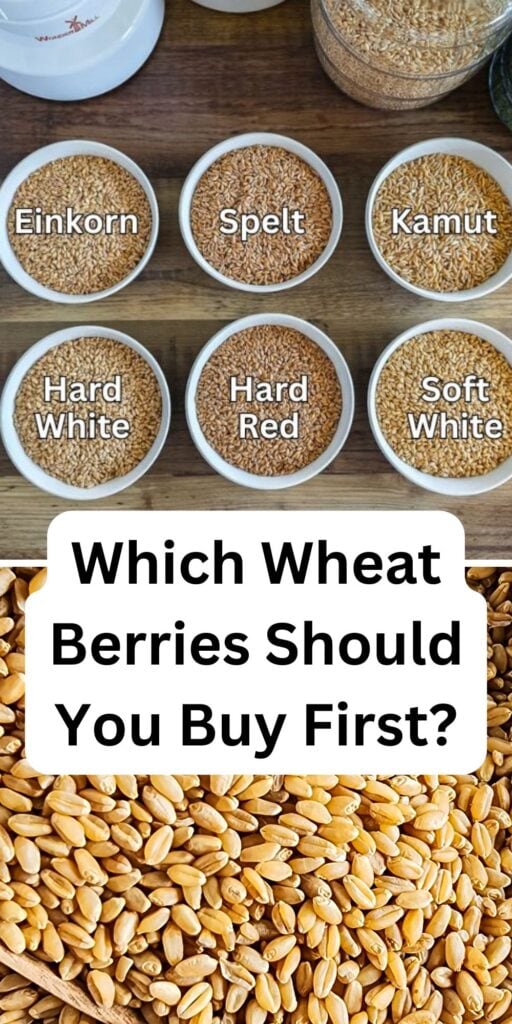
One of the biggest questions beginners ask when starting with freshly milled flour is: what are the best wheat berries to use?
SAVE THIS RECIPE FOR LATER!
I completely understand the confusion. The good news is that you absolutely do not need every grain on day one!
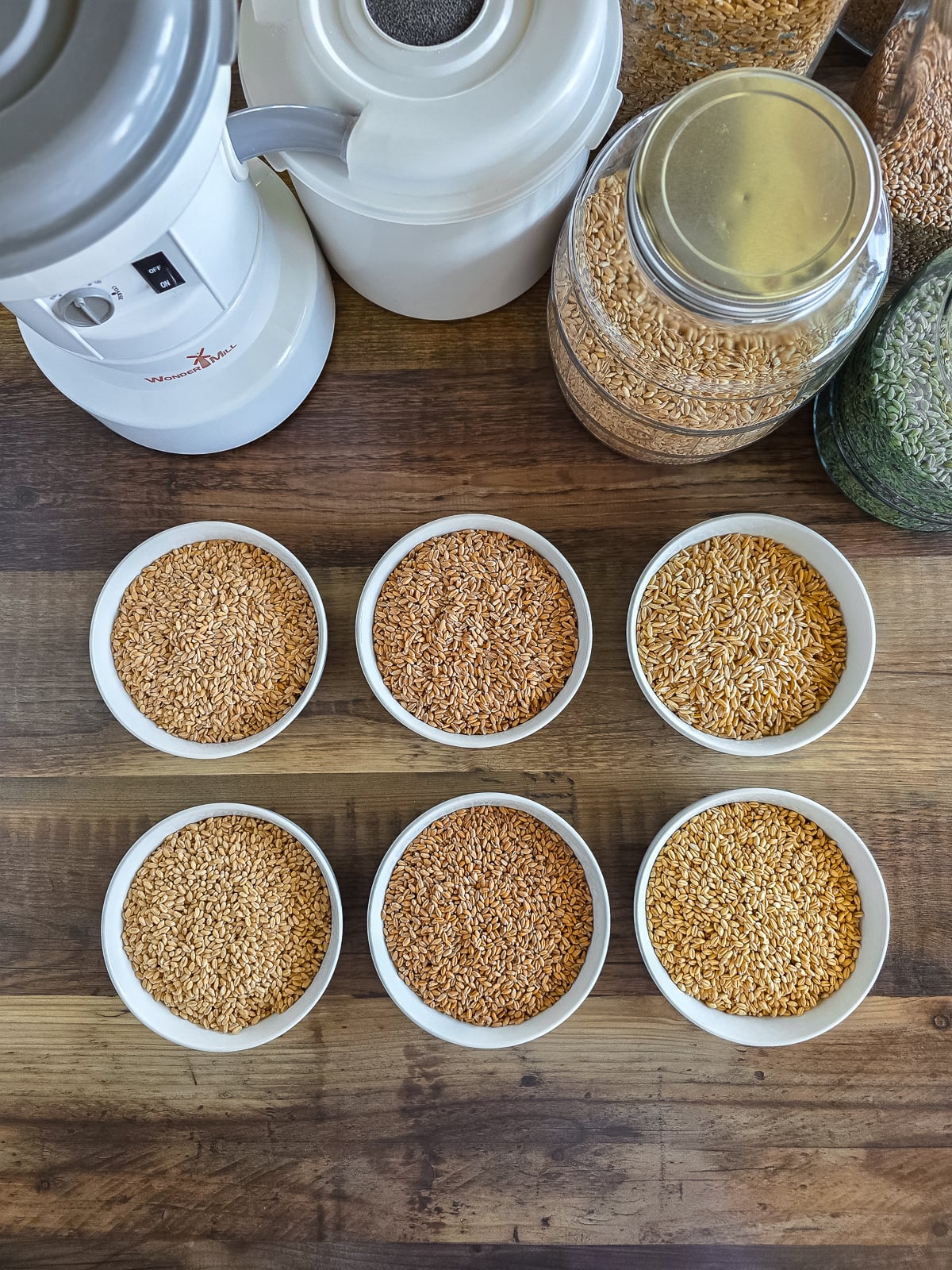
When you’re first getting started, you’ll hear people talk about hard red, hard white, soft white, einkorn, spelt, and Kamut. Seeing all those options can make it feel like you need a pantry full of wheat berries before you can bake your first loaf of bread.
You don’t!
In fact, if you’re brand new to freshly milled flour, there is only one grain I recommend buying first, and it can handle almost everything you want to bake.
Keep reading and I’ll show you exactly which wheat berry to start with, what each grain is best used for, and when you might want to branch out and try something new.
What Are Wheat Berries?
Wheat berries are simply whole, unprocessed wheat kernels. They contain all three parts of the grain: the bran, germ, and endosperm. When you grind wheat berries in a grain mill, you create freshly milled flour that contains all of the nutrients naturally found in the grain.
Different types of wheat berries produce different results in baking, which is why choosing the right grain matters.
| Wheat Berry | Best For |
|---|---|
| Hard White | Bread, rolls, pizza dough, everyday baking |
| Hard Red | Hearty breads and artisan loaves |
| Soft White | Cookies, cakes, muffins, brownies |
| Einkorn | Pancakes, muffins, cookies, quick breads |
| Spelt | Pizza dough, muffins, brownies, crackers |
| Kamut (Khorasan) | Pasta, tortillas, artisan breads |
The Best Wheat Berry for Beginners
If I could only recommend ONE grain for beginners, it would absolutely be hard white wheat.
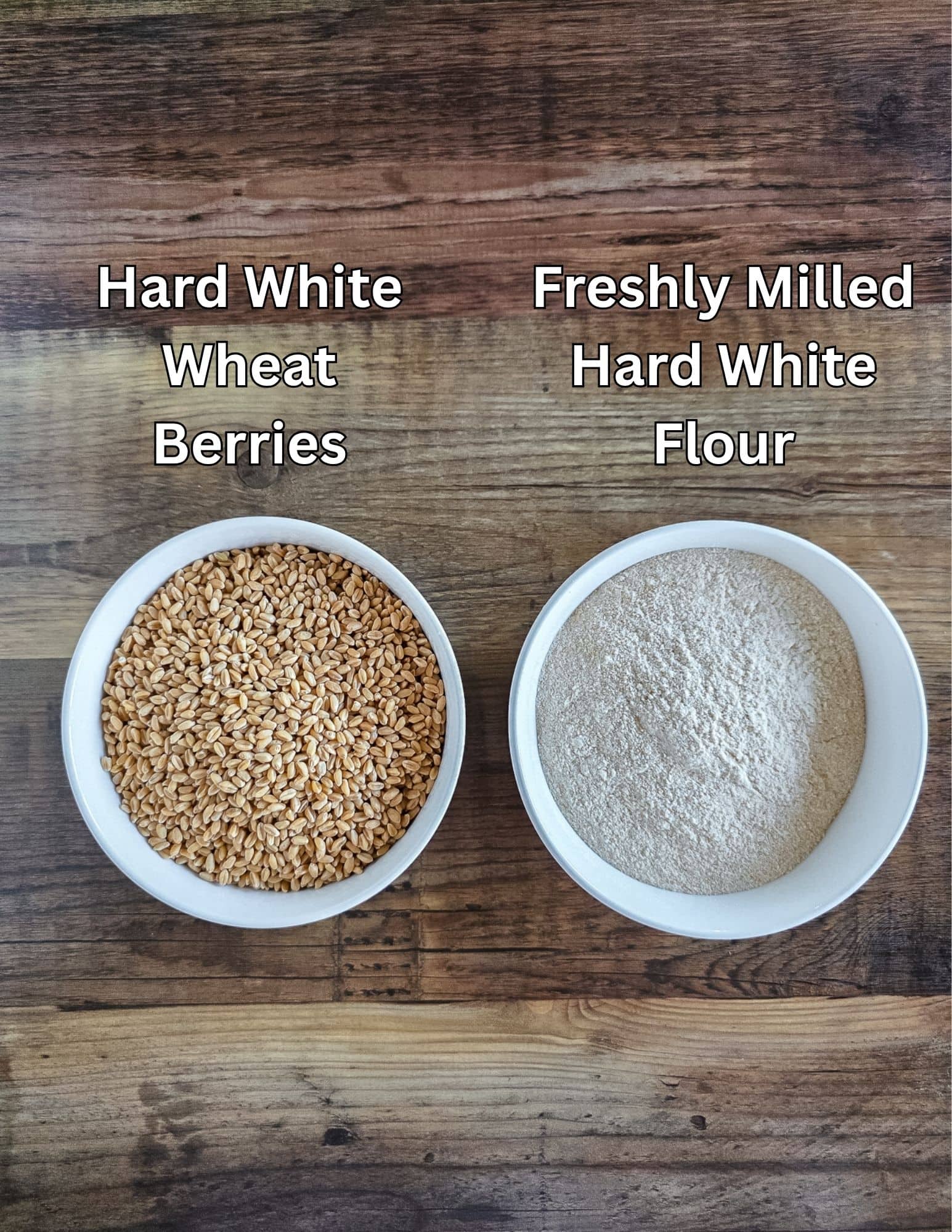
Hard white wheat is the grain I recommend most often because it is:
- mild flavored
- easy to work with
- great for sandwich bread
- versatile enough for almost everything
- Has a mild flavor that many families find easier to transition to
A lot of people worry that freshly milled flour will taste “too healthy” or overly strong. Hard white wheat solves a lot of that. It still gives you all the goodness of whole grain flour, but with a lighter flavor than hard red wheat. This is the grain that helped my own family transition from store-bought white flour to freshly milled flour.
The Most Popular Wheat Berries and How to Use Them
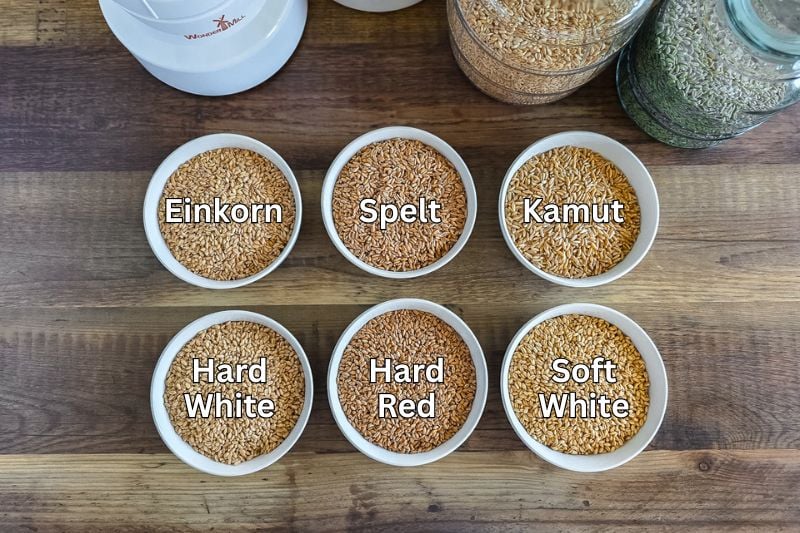
Hard White Wheat
Best for: sandwich bread, dinner rolls, pizza dough, hamburger buns, cinnamon rolls, waffles, pancakes. To be honest I use it for everything!
Flavor: Mild and slightly sweet.
Protein Level: Higher protein, which helps create structure in yeast breads.
My opinion: This is my everyday grain. If you want one grain that can do almost everything, this is it!
Try our 100% Whole Wheat Bread or Cinnamon Rolls.
Hard Red Wheat
Best for: hearty breads, artisan loaves, rustic recipes, stronger flavored baked goods.
Flavor: Nutty and more “whole wheat” tasting.
Protein Level: High protein.
My opinion: Hard red has a much stronger flavor than hard white. Some families love it immediately and others need time to adjust. I think it works best when blended with hard white for beginners. I actually started out with hard red and my husband and oldest son absolutely hated it! It took awhile to get them to try FMF again. Now they happily eat everything I put in front of them. LOL!
Soft White Wheat
Best for: cookies, muffins, cakes, brownies, biscuits, pancakes.
Flavor: Very mild.
Protein Level: Lower protein, which creates softer baked goods.
My opinion: If your muffins or cakes feel heavy or dense, soft white wheat can make a huge difference. It is the second grain I would recommend adding after hard white.
Try our Whole Wheat Pancakes.
Einkorn
Best for: pancakes, muffins, cookies, quick breads, brownies.
Flavor: Rich, buttery, slightly sweet.
My opinion: Einkorn absorbs liquid differently than modern wheat and can get sticky if you add too much flour. I personally love it for muffins and pancakes because the flavor is really special.
Try my Einkorn Granola Bars or Einkorn Zucchini Bread.
Spelt
Best for: pancakes, muffins, brownies, crackers, quick breads, pizza dough
Flavor: Nutty and slightly sweet.
My opinion: Spelt creates very soft baked goods but the dough can feel more delicate than regular wheat. It is fun to experiment with once you are comfortable with the basics. I personally think spelt is the most underrated whole grains out there!
Try our Spelt Pizza Dough.
Kamut (also known as Khorasan)
*Kamut is the brand name, and Khorasan is the actual name of the ancient grain. Most people know it as Kamut, and the two names are often used interchangeably.
Best for: pasta, rustic breads, tortillas, artisan baking.
Flavor: Rich, buttery, almost creamy.
My opinion: Kamut has a beautiful golden color and a rich flavor. A lot of people enjoy blending it with hard white wheat once they are ready to branch out. This is my oldest son’s favorite grain!
Try our 100% Khorasan Wheat Bread.
Where to Start with Whole Grains
If you’re feeling overwhelmed, don’t be! You can do most of your everyday baking with just one grain: hard white wheat. I baked with it for a long time before adding any other grains to my pantry.
Hard white wheat is perfect for bread, rolls, pizza dough, pancakes, muffins, cookies, and everyday baking. It has a mild flavor that most families enjoy, making it the grain I recommend for nearly every beginner.
If you’d like to keep a second grain on hand, add soft white wheat. It works especially well for muffins, cakes, cookies, and other softer baked goods.
Once you feel comfortable with those, then branch out into einkorn, spelt, Kamut, and other ancient grains.
Frequently Asked Questions About Wheat Berries
Do I need to buy all of these grains to get started?
No! Most beginners can start with just hard white wheat and have great success! It is versatile enough for bread, rolls, pizza dough, pancakes, muffins, cookies, and more.
What is the best wheat berry for beginners?
Hard white wheat is usually the best place to start because it has a mild flavor and works well in a wide variety of recipes.
What is the difference between hard white and hard red wheat?
Hard white wheat has a milder flavor and lighter color, while hard red wheat has a stronger whole wheat flavor that many people associate with traditional whole wheat bread.
Do I need a grain mill to use wheat berries?
Yes. To make freshly milled flour, you’ll need a grain mill to grind the wheat berries into flour before baking.
What is the difference between Kamut and Khorasan?
Khorasan is the actual name of the ancient grain, while Kamut® is the trademarked brand name. Most people know it as Kamut, and the names are often used interchangeably.
Where to Buy Wheat Berries
My favorite places to buy wheat berries are Grand Teton Ancient Grains (all my grains minus soft white) and Janie’s Mill for soft white wheat. Many people also find wheat berries at local Amish stores, bulk food stores, Azure Standard, and health food stores.
If you’re just getting started, I recommend purchasing a bag of hard white wheat.
Keep it Simple
You do not have to become an expert overnight. Fresh milled flour can feel overwhelming at first, but choosing the right wheat berries makes everything easier.
Start simple. Learn how each grain behaves. Bake often and remember that every batch teaches you something new.
Fresh flour baking does not have to be perfect to be worth it!
For those who want to go deeper, I also share my complete step-by-step approach in my paid guide. That’s where I walk through the systems I use in my own kitchen, including how I get consistent results when baking with freshly milled flour. This post is meant to give you confidence. The guide is there when you’re ready for more! Get the Complete Guide To Fresh Milled Flour Here