
How to Substitute Freshly Milled Flour in Any Recipe


If you’re wondering how to substitute freshly milled flour in any recipe, the process is actually much simpler than most people think. With just a few small adjustments, you can convert many of your favorite recipes to use freshly milled flour instead of store-bought flour.

Fresh flour behaves a little differently because it still contains the bran and germ from the wheat berry. This gives baked goods better flavor and more nutrition, but it also means the flour absorbs liquid differently and benefits from a short rest time before baking.
Once you understand a few simple guidelines, you can use fresh milled flour in everything from pancakes and cookies to breads and muffins!
If you’re new to baking with fresh flour, be sure to also try my reader favorites: 100% Whole Wheat Bread and Whole Wheat Pancakes. They are two of the easiest recipes to start with.
Why Freshly Milled Flour Behaves Differently Than Store-Bought Flour
Freshly milled flour is different from store-bought flour in several important ways.
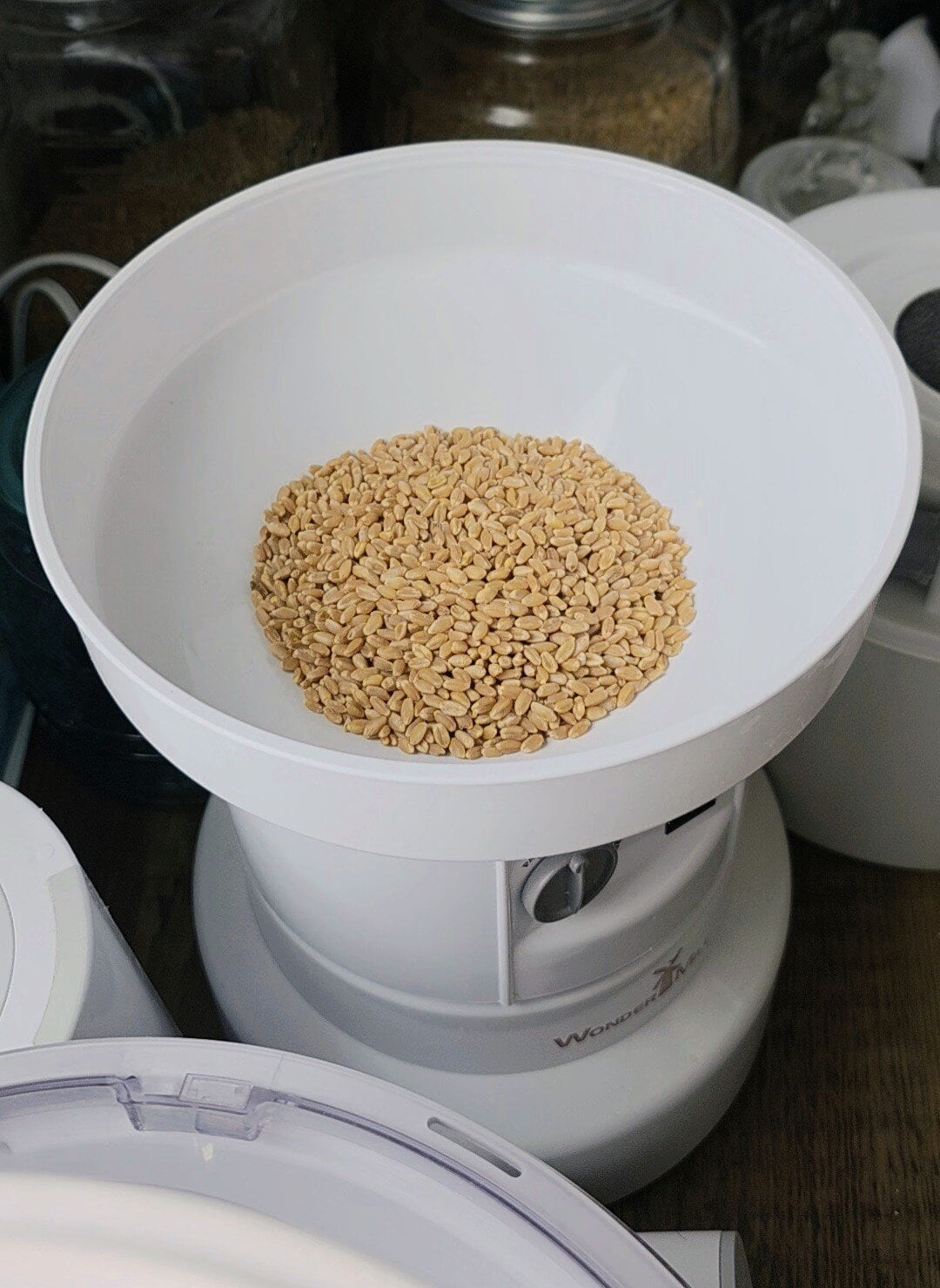
It still contains the bran and germ. These parts of the wheat berry are removed from most commercial flour. Because they are present in fresh flour, they absorb liquid more slowly.
Fresh flour also contains natural oils and nutrients that are lost in processed flour. This is why freshly milled baked goods often taste richer and more flavorful. The taste is very different than store bought whole wheat flour. It truly does not compare!
Because of these differences, recipes sometimes need small adjustments when using freshly milled flour.
Can You Substitute Freshly Milled Flour for All-Purpose Flour?
Yes, you can substitute freshly milled flour for all-purpose flour in most recipes, but it is not always an exact cup-for-cup replacement. Fresh milled flour still contains the bran and germ from the wheat berry, which means it absorbs liquid differently than store bought flour. Because of this, most recipes need small adjustments to get the best results.
A good approach is to use the same amount of freshly milled flour the recipe calls for, but hold back about 1/4 cup at first so you can adjust the dough or batter if needed. This works well for most recipes that use around 3 to 4 cups of flour.
Starting with a little less flour makes it easier to adjust the texture once the flour has fully hydrated. Fresh flour needs time to hydrate because the bran and germ absorb liquid slowly. At first the dough may feel too wet, but after resting it often becomes the perfect consistency!
How the flour behaves can also depend on how recently it was milled. Very fresh flour tends to absorb liquid more slowly, while flour that has rested for several hours may hydrate more quickly.
Because of this, it is best to make adjustments gradually until the dough or batter reaches the right consistency. Freshly milled flour can sometimes feel a little unpredictable, so small adjustments are completely normal when baking with it.
When making adjustments, I usually start by adding a little more flour rather than extra liquid. Changing the liquid can affect the balance of fats, sugars, and leavening in a recipe, so adjusting the flour is often the easier way to fine tune the dough or batter.
Let the Dough Rest
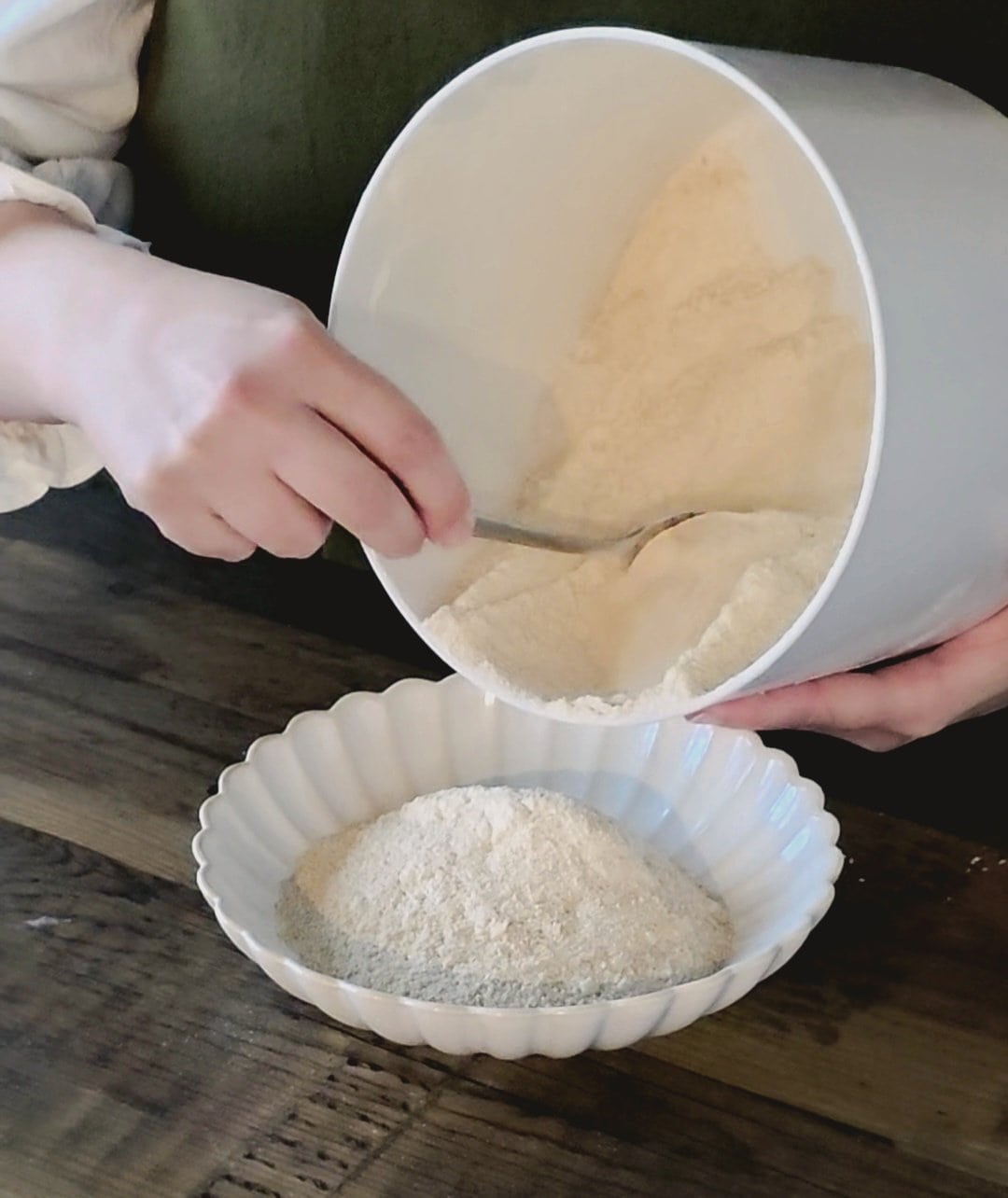
Freshly milled flour absorbs liquid more slowly than store-bought flour. One of the easiest ways to improve your results is to allow the batter or dough to rest for 10 to 15 minutes before baking.
This rest time allows the bran to hydrate and soften. The dough will often thicken slightly during this time. This simple step can make baked goods softer and lighter.
Adjust the Liquid if Needed
Sometimes freshly milled flour can make dough slightly thicker. If the dough or batter seems dry after resting, add a small amount of extra liquid.
Start by adding 1 to 2 tablespoons at a time until the texture looks right. Most of the time only a small adjustment is needed. It is best to wait until the dough has rested and been mixed or kneaded before adding extra liquid, since freshly milled flour needs time to fully hydrate.
Choose the Right Wheat Berries for the Recipe
Choosing the right wheat variety can make freshly milled baking much easier, especially when you are first learning how different grains behave.
Different wheat berries work better for different types of recipes. Using the right wheat can make a big difference in the final texture and flavor.
- Hard white wheat works well for bread, rolls, and sandwich loaves.
- Soft white wheat is ideal for cookies, pancakes, muffins, cakes, and pastries.
- Hard red wheat has a stronger whole wheat flavor and is great for hearty breads.
SAVE THIS RECIPE FOR LATER!
Measure Flour the Right Way
When baking with freshly milled flour, it is important to measure flour correctly. Use a dry measuring cup and lightly spoon the flour into the cup.
Do not pack the flour down. Then level the top with a knife.
This method helps keep your flour measurements consistent from recipe to recipe.
Recipes That Work Great with Freshly Milled Flour
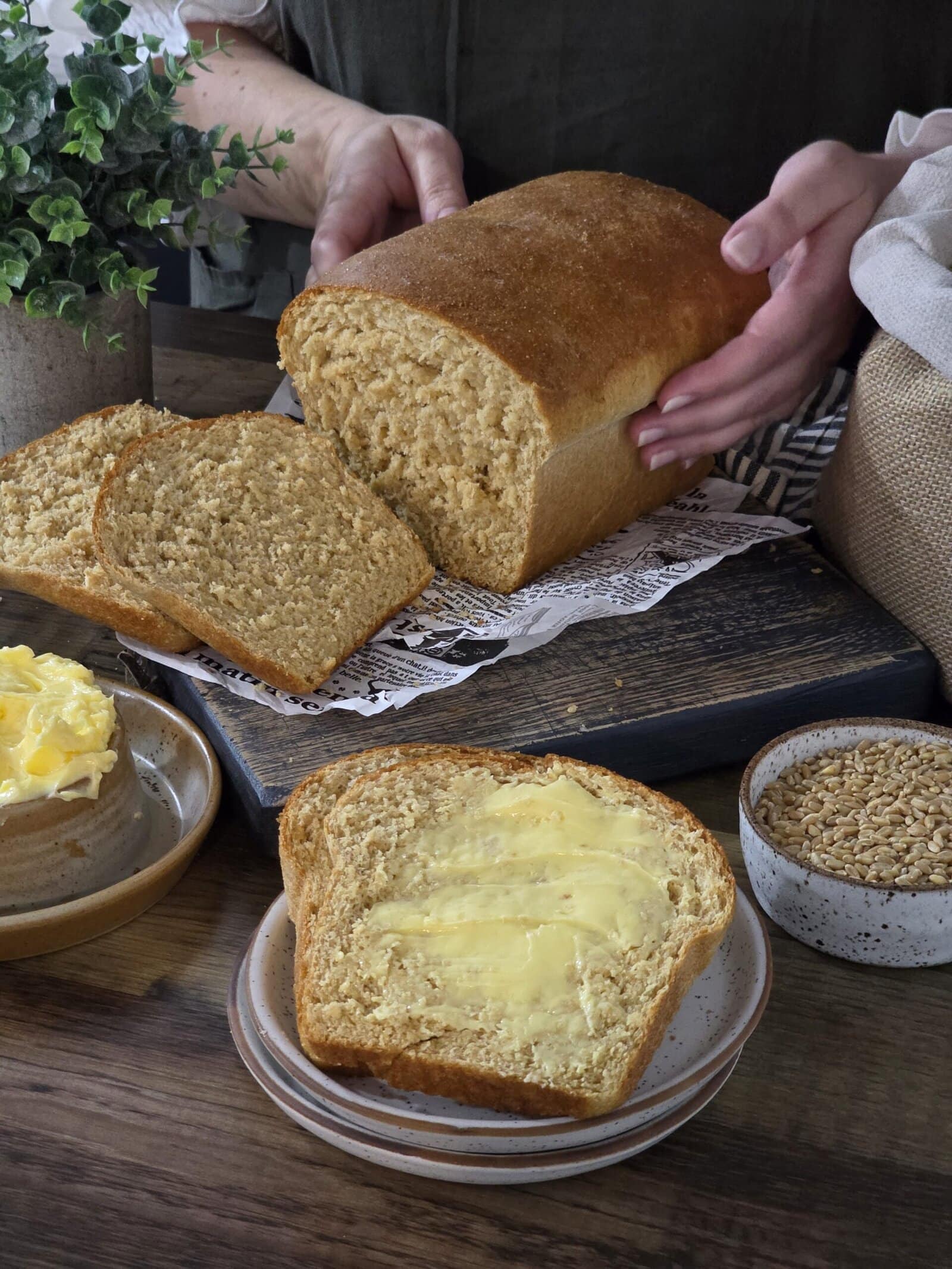
Freshly milled flour works amazing in many everyday recipes!
Some of the easiest recipes to start with when baking with freshly milled flour (FMF) include:
• Pancakes: FMF pancakes
• Muffins: FMF Pizza Muffins
• Cookies: FMF Chocolate Chip Cookies
• Quick Breads: Einkorn Zucchini Bread
• Sandwich bread: Khorasan Bread
Once you get comfortable working with fresh flour, you will find that it can be used in most of your everyday baking. I even use it for breading chicken strips, in meatloaf, pizza dough, you name it!
Quick Tips for Substituting Freshly Milled Flour
- Start with slightly less flour and adjust as needed.
- Let the dough or batter rest for 10 to 15 minutes so the bran can absorb liquid.
- Add extra liquid gradually if the mixture becomes too thick.
- Choose the right wheat for the recipe. Soft white wheat works best for muffins, cookies, and pancakes, while hard white or hard red wheat is ideal for bread.
FAQs About Substituting Freshly Milled Flour
Can you substitute freshly milled flour for all-purpose flour in any recipe?
Most recipes can be adapted to use freshly milled flour with a few adjustments. Quick breads, pancakes, cookies, and muffins are usually the easiest to convert.
Does freshly milled flour need more liquid?
Often it does. Because the bran absorbs moisture slowly, dough or batter may need a little extra liquid after resting.
What wheat works best for baking?
Soft white wheat works well for pancakes, muffins, cookies, and cakes. Hard white wheat or hard red is usually best for bread and rolls.
Do I need to sift freshly milled flour?
No! Freshly milled flour can be used exactly as it comes from the mill. I have never sifted my flour in all the years I have been baking with it.
Common Mistakes When Substituting Freshly Milled Flour:
When people first start baking with freshly milled flour, a few common mistakes can make recipes harder than they need to be.
- Not allowing the batter or dough to rest before baking
- Adding too much flour before the bran has time to hydrate
- Using the wrong wheat variety for the recipe
- Expecting freshly milled flour to behave exactly like white flour
Final Thoughts
Fresh milled flour behaves differently than store-bought flour, but once you understand how it hydrates and rests, it becomes much easier to adapt your favorite recipes.
If you’re curious to learn more about freshly milled flour, including why modern white flour became the standard, how fresh flour behaves in baking, and how to adapt your favorite recipes, I cover all of that in my Complete Guide to Freshly Milled Flour.